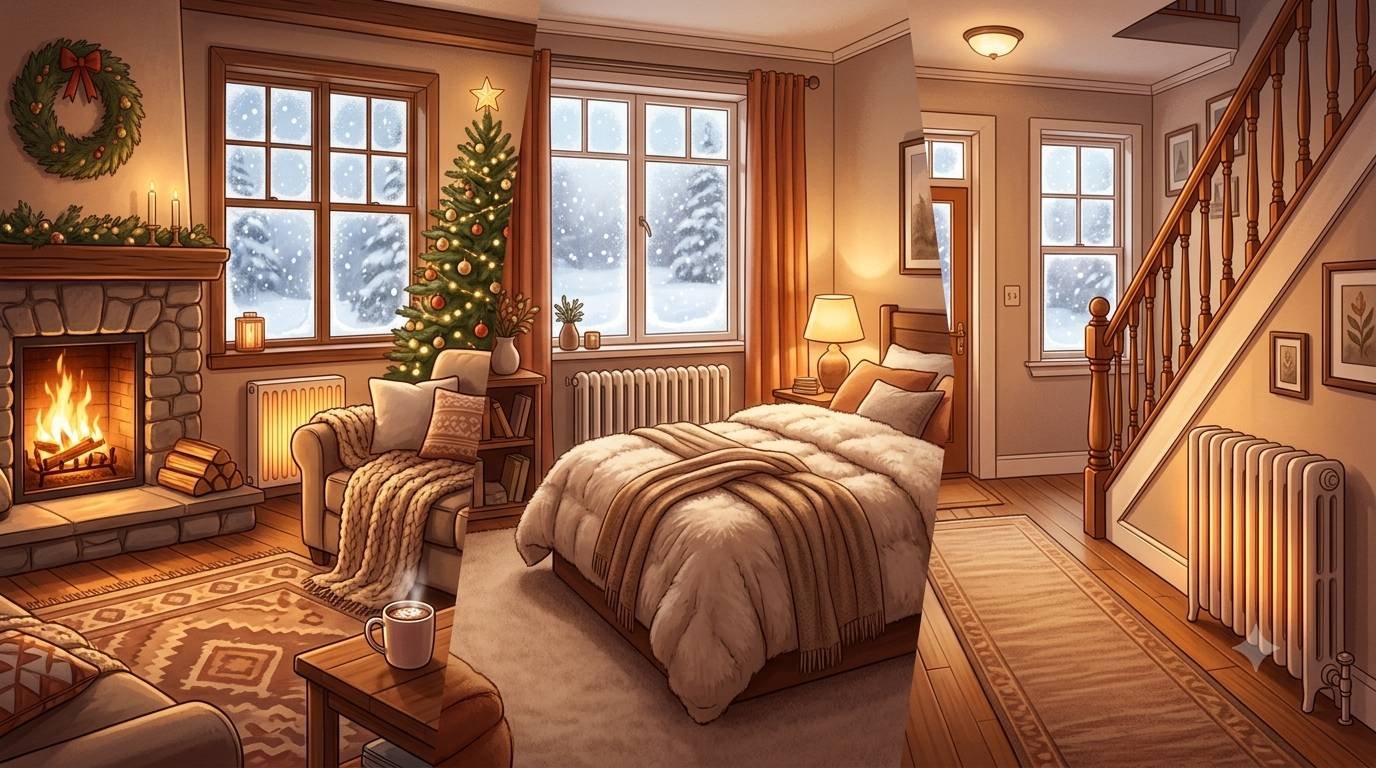
Winter heating works best when each room is treated according to how it is used. A single thermostat setting rarely delivers the right balance of comfort and efficiency across the whole house, because bedrooms, living rooms and hallways serve different purposes and lose heat at different rates.
Finding a good radiator temperature in the winter means matching boiler flow settings and individual radiator valves to the needs of each space. Room air temperatures between roughly 16°C and 21°C suit most homes, while radiator surfaces themselves typically need to reach 65°C to 75°C on colder days to warm the air effectively. Thermostatic radiator valves make it possible to fine-tune this room by room without constantly adjusting the main thermostat.
Understanding Boiler Flow and Room Air Temperatures
The temperature of the water leaving the boiler, known as the flow temperature, determines how hot the radiators become. For most gas boilers in winter a flow setting between 60°C and 75°C is sufficient. Many systems leave the factory set higher, often around 80°C, which can waste energy. Lowering the flow temperature towards 60°C allows a modern condensing boiler to recover more heat from the flue gases and usually still keeps rooms comfortable, provided the radiators are correctly sized and free of air or sludge.
Room air temperature is controlled separately by the thermostat and by thermostatic radiator valves. The World Health Organization advises a minimum of 18°C for healthy adults in cold weather, with higher levels recommended for young children, older people or anyone who is unwell. These figures are a useful floor rather than a rigid target. Insulation levels, external wall area, window size and personal preference all influence the final setting that feels right in a particular home.
Heating Bedrooms in Winter
Bedrooms are usually occupied for long periods of rest rather than active movement. A cooler environment supports the natural drop in core body temperature that helps people fall asleep and stay asleep. Most adults find 16°C to 19°C comfortable overnight. Keeping the bedroom cooler than the living areas also reduces the amount of heat the system needs to produce during the hours when demand is lowest.
Thermostatic radiator valves make this straightforward. Setting the bedroom valve lower than the living-room valves allows the same boiler cycle to deliver different air temperatures. Closing the bedroom door helps retain the cooler air and prevents warmer air from other rooms migrating in. If the room feels too cold first thing in the morning, a slight increase on the valve or a short boost from a programmable thermostat is usually enough without heating the space to living-room levels all night.
Older residents or very young children may need the bedroom closer to 18°C. In those cases the priority is consistent mild warmth rather than the cooler range preferred for adult sleep.
Living Rooms: Comfort and Consistency
Living rooms are the spaces where people sit still for longer periods. Sitting generates little body heat, so a cooler room is felt more quickly. A daytime range of 18°C to 21°C works well for most households. The higher end of that range suits open-plan areas, rooms with large windows or homes that are less well insulated.
Because the living room is often the main occupied space in the evening, it is sensible to ensure the radiator or radiators serving it can respond promptly. Clear space around the radiator, closed curtains after dark and a stable thermostat setting all help the room reach and hold temperature without the boiler cycling more than necessary. Turning the heating up and down repeatedly is less efficient than choosing a steady level and letting the system maintain it.
Hallways and Connecting Spaces
Hallways, landings and stairs are transitional areas. People pass through them rather than linger, so they do not need the same temperature as rooms that are occupied for hours. A range of 16°C to 18°C is normally enough to take the chill off and to reduce the risk of condensation on colder surfaces.
These spaces often contain the main thermostat. When that happens, the hallway temperature effectively becomes the reference point for the whole system. If the hallway is set higher than necessary, the boiler may continue running after other rooms have already reached a comfortable level. Lowering the hallway thermostatic radiator valve, or accepting a slightly cooler corridor temperature, can prevent this overshoot and reduce overall energy use.
Because hallways connect every room, heat is constantly lost through open doors and stairwells. Keeping doors closed when possible and ensuring radiators in these areas are not blocked by furniture or coats helps them do their limited job without forcing the boiler to work harder.
Practical Steps for Effective Room-by-Room Control
A few straightforward actions improve the performance of any central heating system in winter:
- Bleed radiators at the start of the season so trapped air does not leave cold spots at the top.
- Balance the system so radiators furthest from the boiler heat at a similar rate to those nearer it.
- Keep radiators clear of furniture, long curtains and heavy coverings so heat can circulate into the room.
- Set thermostatic radiator valves according to the intended use of each space rather than leaving every valve fully open.
- Choose a steady thermostat temperature and rely on timers or smart controls for daily schedules instead of frequent manual adjustments.
Common Issues and When Professional Help Is Useful
Radiators that stay cold at the bottom often contain sludge that restricts flow. Cold patches at the top usually indicate air that needs bleeding. If bleeding and balancing do not restore even heat, or if the boiler struggles to reach the chosen flow temperature, a heating engineer can check the pump, valves and system cleanliness.
Homes with older or poorly insulated fabric may need a higher flow temperature on the coldest days. In those cases it is still worth testing a lower setting once milder weather returns. Anyone unsure about adjusting boiler controls, or concerned about the health implications of cooler rooms for vulnerable household members, should seek advice from a qualified heating engineer or a medical professional as appropriate.
Conclusion
Treating bedrooms, living rooms and hallways according to their different roles produces a more comfortable and efficient home in winter. Cooler bedrooms support better sleep, living rooms benefit from steady moderate warmth, and hallways need only enough heat to prevent chill and damp. Matching boiler flow temperature, thermostat settings and individual radiator valves to these needs keeps energy use under control without sacrificing comfort.
Start with the recommended ranges, make small adjustments, and allow a few days for the system to settle. Regular simple maintenance such as bleeding and keeping radiators clear will help every room reach the temperature you intend.